Articles by "Life Style"

Celebrity interior designer and author of "Vintage Remix: The Interiors of Kishani Perera", Kishani Perera explains how you can make the most of a tight space when furnishing a small bedroom.
Celebrity interior designer and author of "Vintage Remix: The Interiors of Kishani Perera", Kishani Perera explains how you can make the most of a tight space when furnishing a small bedroom.(photo: Jean Randazzo)
eHow spoke with Kishani Perera, interior designer and author of “Vintage Remix: The Interiors of Kishani Perera,” about the importance of embracing a small bedroom and the best ways to decorate the compact space. Perera also owns Rummage, an interiors boutique in Los Angeles filled with vintage, whimsical and eclectic decorative arts and furnishings. She has designed interiors for celebrities, including Molly Sims, Gary Oldman, Vanessa Marcil and Josh Duhamel.

What’s the most common mistake you see when people start designing a small room?

Kishani Perera: When people have a small room, they always think they need small, diminutive furniture to fill it up. They put a bed, a little dinky pillow and then that’s it. They are terrified of filling it up too much, and they are terrified [to use] big-scale pieces, which I think is a huge mistake.

It seems a lot of people try to make small rooms appear larger.

K.P.: I let [the room] be what it is, but maximize the space and take advantage of what is there. I actually like to embrace quirks and weirdness in homes. If it’s a tiny space, make it a cool, little, cozy bedroom. If not, it can be really obvious that you are trying to make it look bigger and it totally looks [as if] you are trying to fight the space. It doesn’t work at all. Don’t fight the space. Don’t be afraid to paint it a dark color and go with luxurious textiles, like a really cool shag rug, so when you come in, it's like a cozy cocoon.

Why are big-scale pieces great in a small space?

K.P.: I actually love playing with scale and filling up the room. It’s about taking advantage of the vertical space with tall, skinny things, and that can actually make it look bigger. It also maximizes your storage.

So you don’t get trapped in any pitfalls, what do you take into consideration when you first design a room?

K.P.: First thing, I see what inspires my client. I actually give them homework and ask them to pull images of what they like, what speaks to them. It doesn’t have to be a whole room, but just one thing: a color, a lamp, anything. Then I have to find out what they want to use the space for.

It seems a lot of rooms are more multipurpose nowadays.

Stack antique suitcases on top of a tall armoire. You'll get additional storage and a vintage look. (photo: Demand Media/Eileen Sweeney)
K.P.: Yes, I think, in general, people want to maximize their space now. When I was growing up, we had a dining room that people never sat in. Your bedroom can also be the place you work from now, or you may use it to watch a little TV. You have to think about all of these things when you’re designing a room. Where is the TV going to go? Is it going to be mounted on the wall? Is it going to sit on top of something? Where is it going to go? You have to figure it out — and everyone is different [when it comes to his preference].

Some designers use a focal point and work around that. Do you?

K.P.: I understand that philosophy, but I look at the whole space rather than one piece. For a bedroom, there may be a textile I build off of, but I wouldn’t say that’s the focal point of the room.
Definitely the bed [is a place to start] because you have to figure out if the person wants a platform bed, if they want it low, or like something high with lots of bedding and fluffy pillows.

How do you start building out the bedroom? What furniture do you take into consideration?

K.P.: Based on the inspiration, I start pulling fabrics. Then I consider what the person needs and the space he has, like does an armoire need to double as a TV cabinet? We start pulling pieces like that. For small spaces, I like to find furniture that serves that dual function.
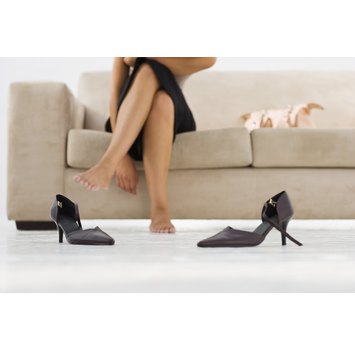
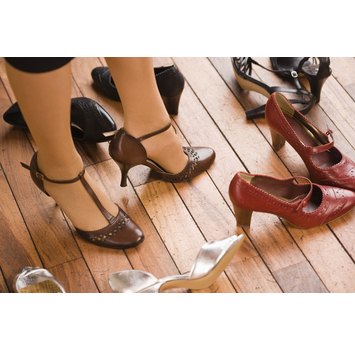
For many women, high heels are a treasure. Sure, they hurt your feet sometimes, but what other accessory can add an instant dose of glam – and a few slimming inches -- to your look? Because you love your high heels so much, they probably get a lot of wear, which means they’re bound to take a beating along the way. So how do you know if your heels still have some life in them or whether they’re past their expiration date? Learn to decipher when they're worth repairing -- and when it's time to say goodbye.

Take Action


If your heels aren't comfortable, you'll never want to put them on. (photo: Jupiterimages/Pixland/Getty Images)
Before you don your shoes for their first night out, take several steps to help them live a longer – and more comfortable – life. “A shoe can last your whole lifetime if you take care of it and don’t wear it every day and do the little tiny maintenance things to keep them good,” says Lori McCravey, head buyer for FootFitter.com, a shoe and footwear care site.
The first thing you should do -- even before you actually buy a pair of high heels -- is make sure the heels fit properly and are comfortable enough to walk around in. If you need help finding the best fit for your foot, ask an associate at the shoe store or boutique. “[With] shoes, if they don’t feel good, you might as well not have them,” McCravey warns. “If they’re not comfortable, you can buy tons of little inserts or insoles or pads for the inside of your shoes to make them comfortable.”
There are an endless number of different inserts and shoe pads that work specifically for high heels, whether it’s an open-toe padded insole or a heel pad to prevent blisters. Work with the shoe store associate to figure out what you’re going to need to be comfortable in the shoes before you purchase them.
Once you’ve claimed your new shoes, take a few more measures to protect and prolong their life. First, add an extra rubber sole on the bottom of your heels to keep them from wearing down. “One thing we do with Louboutins is we put a very thin rubber sole of the bottom of the shoe -- and we happen to use a red rubber sole. That protects the actual sole, and that can be done with any shoe,” says Wayne Edelman, president of Meurice Garment Care, a high-end garment and accessories cleaner in New York.
Edelman also adds rubber heel caps to protect the original heel.
Finally, protect your new heels from water and stains by using a rain and stain repellent, which can be found at most shoe stores. This spray doesn’t make shoes waterproof, but it makes them less likely to absorb water or other liquids and makes cleaning easier, Edelman suggests.

Lasting Power


Having lots of heels means each pair will stick around a lot longer. (photo: Jupiterimages/Polka Dot/Getty Images)
Once you start strutting around town in your new heels, there are several things you can do to make sure they look fabulous for as long as possible. First, try not to wear your heels on rainy or snowy days, since water can damage them. If they do get wet, make sure to dry them out properly. “We recommend even stuffing some newspaper in them,” Edelman says. “And never dry them by the fireplace or the heater.” Drying them by a direct source of heat will strip the shoe’s leather of its natural oils, leaving it cracked and distorted.
If you have to wear heels in wet weather, opt for a pair made from synthetic materials, like vinyl. “There are a lot of plastics now being used in shoes,” Edelman explains. “They handle moisture better than a natural substance like suede or leather.”
Another alternative is to simply wear another pair of shoes (cute ballet flats or comfy sneakers) during your commute or your time outside, then change into your heels once you get to your destination.
If you have leather shoes, it’s important to keep them well conditioned, McCravey recommends. “If you keep your leather conditioned nicely, they’ll be more flexible and stretch with your feet more.” Make sure you’re polishing and conditioning your heels regularly, even if it means taking just a few minutes to brush the dirt off and rub in some shoe polish.
Another way you can treat your shoes nicely: “Don’t throw them in a big pile in the closet,” McCravey insisted. “If you don’t keep your shoe boxes, you might consider a shoe bag to put them in so they don’t scratch against other shoes.”
McCravey also suggests purchasing shaft shapers to slide inside your high heel boots to help them stand up straight and keep their shape. This prevents lines and cracks from forming in the leather.

Be Flexible, Own More

If you want your shoes to treat you nicely, make some adjustments. “All shoes can be kind of uncomfortable sometimes, but those kind of things are temporary,” says McCravey. “If a shoe is absolutely pinching your toes or makes your feet ache when you take them off, you either need to adjust your shoes for your feet -- or you shouldn't wear those shoes.”
Purchase a shoe stretcher – you can get a high heel-specific stretcher on many shoe sites online – to stretch out your shoes and give your feet a bit more room. “It can make a huge difference on the wear of your shoe,” McCravey says. “It can make your shoe last much longer, and your feet will feel so much better.”
One final piece of advice: Rotate your heels. “Though you have a favorite pair, you should try to alternate several pairs,” Edelman suggests. Having multiple pairs of heels means you’ll wear each one less often, making them last much longer.
Edelman's rule to for well-heeled women to live by? "The more, the merrier: The more you have, the longer each one will last.”

MKRdezign

Contact Form

Name

Email *

Message *

@AR Akash. Powered by Blogger.
Javascript DisablePlease Enable Javascript To See All Widget